
White Rabbit, Abigail Rose-Marie (Review by Darlene Smoliak)
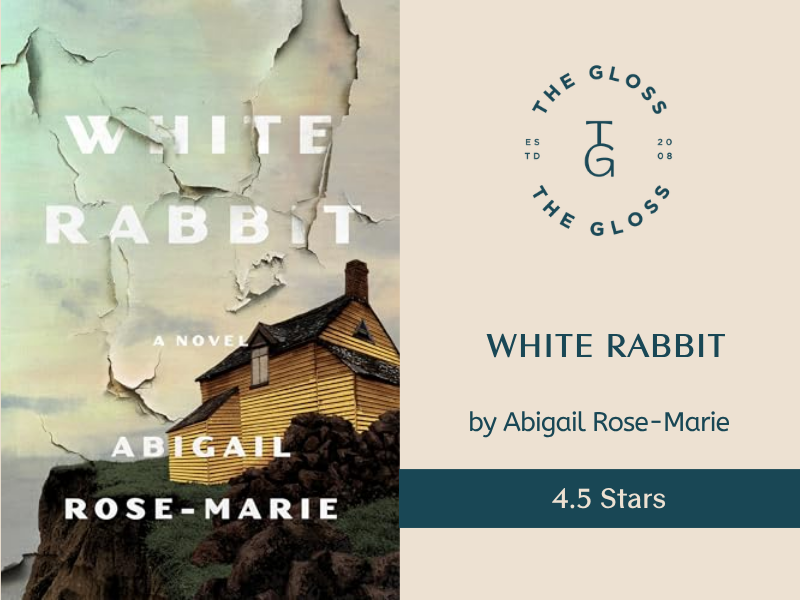

Rating: 4.5/5 Stars
I was drawn to White Rabbit by its unique premise. It is the story of a young girl dealing with the overwhelming grief of her father leaving, her mother withdrawing more by the day, and the ghost of Sylvia Plath becoming her companion to help her navigate her world.
Our narrator is Penelope, a neurodivergent eleven-year-old dealing with a multitude of struggles. She lives with her mother in a yellow house overlooking Massachusetts Bay—a house that the poet Sylvia Plath herself once lived in. Penelope has OCD, comforting herself by counting things and fighting to ensure her world remains constant. After her world is upended by her father leaving, her daily battle with sorrow makes it increasingly hard to function, and we watch her grip on reality slip. While marketed as horror, this novel is more eerie than scary, reading beautifully as literary fiction. It completely sits with you; you can truly feel Penelope’s loneliness and dread. My heart was firmly with Penelope, a character I just wanted to wrap my arms around.
White Rabbit is a heart-wrenching story of a young girl losing her way as her family crumbles, yet it still leaves us with a glimmer of hope. As a content note, the book addresses many triggering topics, but the author treats them with immense care. Still, always protect your own peace first. White Rabbit has stayed with me long after turning the final page, and I frequently find myself still thinking of Penelope. I highly recommend this novel to anyone who enjoys a blend of eerie horror and deep literary fiction.