
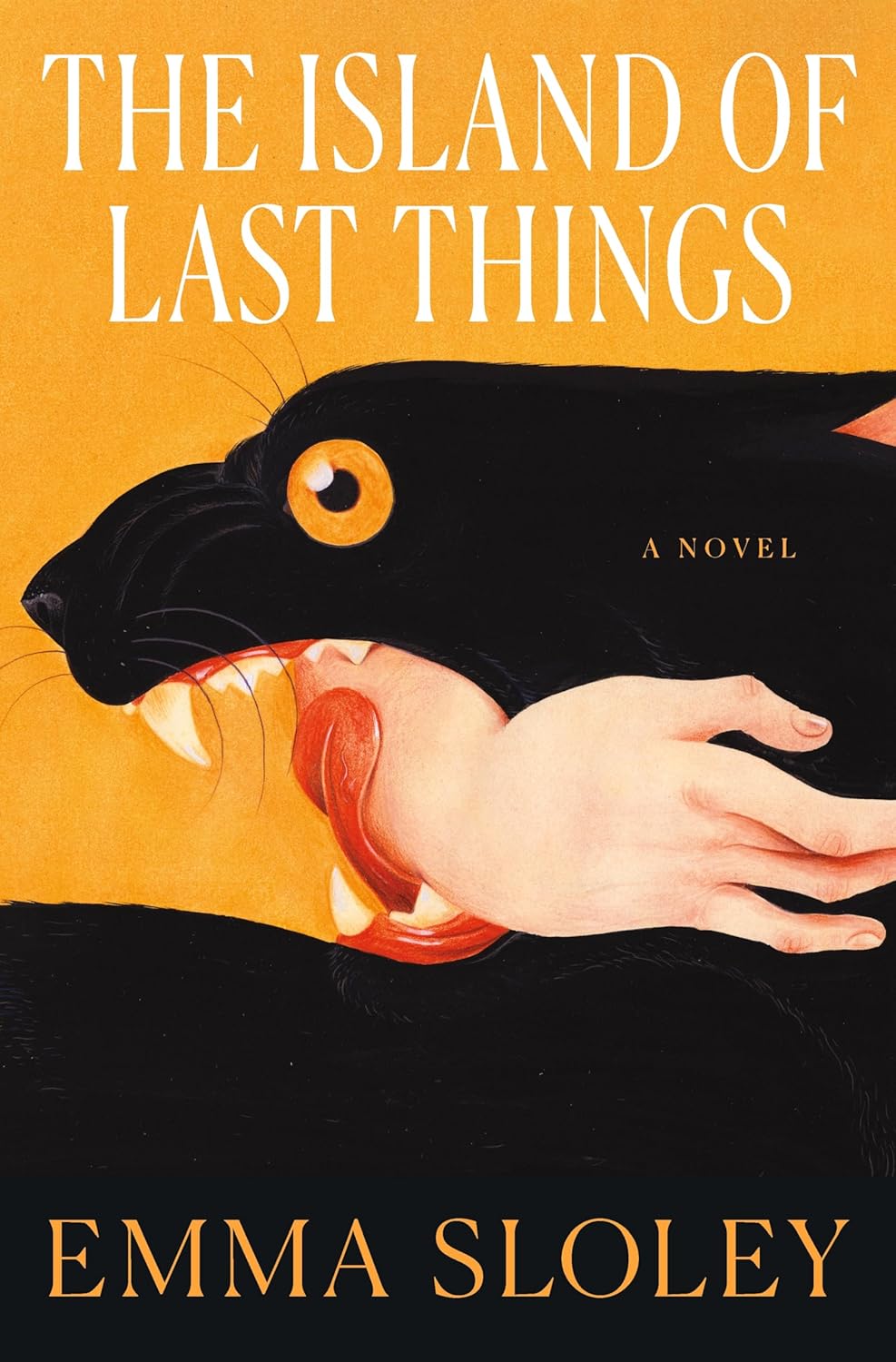
The Island of Last Things, Emma Sloley (Review by Melissa Frye)

Rating: 5.0/5 Stars
“The Island of Last Things” by Emma Sloley follows two zookeepers, Camille and Sailor, that work at the last zoo in the world built within Alcatraz. The story is depicted on a dystopian canvas where a fungus of sorts has contaminated the world along with many of the last standing species of animals. Camille, set in her routine, is pushed to expand her perception of the world with the arrival of Sailor, an animal rights radical, and the promise of a sanctuary. Sailor convinces Camille that the only way for the animals is to smuggle them to freedom.
The way in which Sloley opens a door to this new world where losing animal presence and companionship in the world is a possibility is astounding. She provides a microscopic view into the finest details of animals – the way their fur smells, the way they feed on human emotion and the way in which their absence impacts the human psyche. The novel emphasizes contemplative moments which was the kickstart to how engaged I was. While some could argue that the character depth was lackluster and the plotline velocity was not there, I found myself with a hankering to learn more about the fate of the zoo and these animals.
The book also challenges the philosophy of animal confinement versus extinction which is an interesting tilt on this topic. While we are presented with the hope of a sanctuary, the main source of Sailor’s motivation, we are often left with the consideration that living in enclosures beats the alternative of a complete loss of the finest blessings that animals share with humans. This consideration forced me to look past the potentially avaricious intentions of the Alcatraz owners in fear of what a life completely absent of animals would look like.
This truly might be my favorite book I have read in a long time. I feel like I will forever be haunted particularly with the ending but it truly made me appreciate animals more than I thought I ever could.
Rating: 5.0/5 Stars
“The Island of Last Things” by Emma Sloley follows two zookeepers, Camille and Sailor, that work at the last zoo in the world built within Alcatraz. The story is depicted on a dystopian canvas where a fungus of sorts has contaminated the world along with many of the last standing species of animals. Camille, set in her routine, is pushed to expand her perception of the world with the arrival of Sailor, an animal rights radical, and the promise of a sanctuary. Sailor convinces Camille that the only way for the animals is to smuggle them to freedom.
The way in which Sloley opens a door to this new world where losing animal presence and companionship in the world is a possibility is astounding. She provides a microscopic view into the finest details of animals – the way their fur smells, the way they feed on human emotion and the way in which their absence impacts the human psyche. The novel emphasizes contemplative moments which was the kickstart to how engaged I was. While some could argue that the character depth was lackluster and the plotline velocity was not there, I found myself with a hankering to learn more about the fate of the zoo and these animals.
The book also challenges the philosophy of animal confinement versus extinction which is an interesting tilt on this topic. While we are presented with the hope of a sanctuary, the main source of Sailor’s motivation, we are often left with the consideration that living in enclosures beats the alternative of a complete loss of the finest blessings that animals share with humans. This consideration forced me to look past the potentially avaricious intentions of the Alcatraz owners in fear of what a life completely absent of animals would look like.
This truly might be my favorite book I have read in a long time. I feel like I will forever be haunted particularly with the ending but it truly made me appreciate animals more than I thought I ever could.