
The Fire Agent, David Baerwald (Review by Stacey Lorenson)

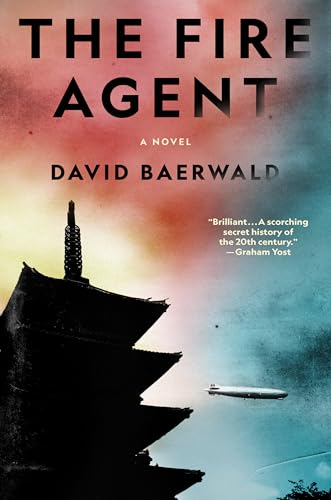
Rating: 5.0/5 Stars
Ernest Baerwald, born a German Jew, studied in Japan and later trained in Italy for nine years under a former Dark Ocean samurai. He then worked for German chemical industries while making his home in Japan. Baerwald fought for Germany in World War I and was captured, spending five years in a Japanese POW camp. Fluent in Japanese, Russian, Italian, German, Chinese, and English, he became indispensable as an undercover spy to both political hierarchies and the criminal underworld. He eventually became an adviser to the Americans and played an instrumental role in national security during World War II.
Baerwald was a complicated man with an equally complex personal life, much of which he sacrificed for honor, justice, and his ideal of democracy. He was also a talented violinist.
This story explores the rise of fascism in Japan and Germany, as well as the American counterintelligence efforts that contributed to the eventual defeat of both nations in World War II. It chronicles German engineering of experimental chemical warfare, the corporations and countries that shaped political interests, and the fringe terror and organized crime groups that influenced global events.
The international espionage is fascinating. The development of chemical warfare—funded by morally bankrupt corporate interests, scientists, and governments—is maddening. Baerwald’s unconventional love story is captivating. The fascist idealism of the Japanese was new to me, as U.S. history education often focuses primarily on the Nazis’ fanatical rise to power.
Reading the early manifestos behind German supremacy has an eerie echo in today’s political landscape that is impossible to ignore.
An epic work of historical fiction spanning 1900–1947, The Fire Agent is based on the life of the author’s grandfather, Ernest Baerwald. Ernest’s initiation and tutelage under a Japanese samurai in Italy, where he trained in martial arts, language, culture, tradition, and history, and was shaped into an assassin and spy. His development of a fertilizer business—intended to restore global food supplies—became a catalyst for the nefarious chemical weapons later used in World War I and World War II.
The novel reveals the staggering amount of corporate influence—European, Japanese, American, and Russian—along with political upheaval, fringe radical groups covertly supported by foreign governments, and the involvement of international spies attempting to alter the course of history. It also highlights the personal sacrifices made in the name of justice and the protection of democracy. David Baerwald’s The Fire Agent is nothing short of epic. The suffering of soldiers and civilians, the horrors of combat, and the unexpected camaraderie found in a Japanese prison camp during World War I are vividly described. The desperation of war is balanced by the connections formed among those fighting to protect humanity. Moments of joy, love, loyalty, hope, legacy, and democratic ideals shine through.
The rise of fascism in Japan and Germany brought the world to the brink of destruction. Baerwald, intimately connected to both nations, used his unique skills to help bring them down.
The author uncovered a long-hidden family secret: his grandfather played an instrumental role in both World Wars as a spy, supplying the Americans with detailed intelligence on Japan’s military operations. This astonishing historical novel is based on Ernest Baerwald’s long-lost journals, spy cameras, photographs, and letters, which document his extraordinary life and illuminate critical historical events—such as the firebombing of Japan, the Bando War Camp, the Rape of Nanking, Japanese crime syndicates, the Jews of Shanghai, chemical warfare, and the creation of the CIA.
Do not let the size of this novel intimidate you. The content is absorbing, the love story is unique, and the fate of humanity hangs in the balance as international forces work behind the scenes to stop the rise of fascism in Japan and Germany while monitoring the spread of Communism. The staggering number of civilians and soldiers lost in the pursuit of supremacist ideals is unforgettable.