
Joan of the Arcane, Alexandra Fleder (Review by Omonivie Williams)

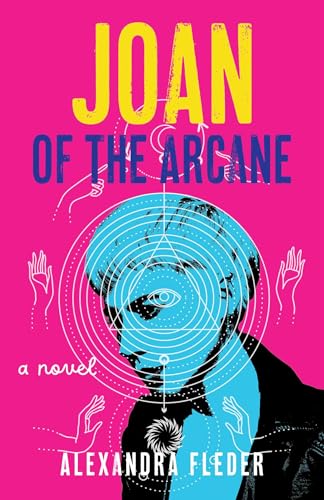
Rating: 4.5/5 Stars
Joan was a punk rocker in her youth. Later she lived in the suburbs as a mother of two. Now that her children have flown the coop, it’s time for her life to take a new direction. But what comes next? As Joan reflects on the paths that led her to where she is today, either by choice or enforced upon her, she stumbles onto the side of the internet dominated by conspiracy theories, the ‘hidden truths’ of the world.
Joan of the Arcane is written from a first-person point-of-view. In this book, truth, purpose and self are central themes. Alexandra Fleder’s use of Joan’s stream of conscious thinking and of pronouns, creating divisions of “I”, “they” and “we”, blurs fact and fiction. Joan is a martyr, a warrior under the banner, much like Joan of Arc, fighting in a world that seems to have given up. Or so she imagines herself to be. Joan’s habit of going on informative spiels followed by the stranger-than-fiction has a way of either drawing the reader in or doing the exact opposite; putting them off. Fleder’s immersive narrative draws us into Joan’s world and into Joan’s past, present and future.
I read the majority of the book under the guise of satire. I observed all of Joan’s choices and actions, reading them simply as those of a fictional character. However, it occurred to me as I was reaching the end others might find this book spiritual. I wasn’t able to decipher the author’s intent. There were moments of self-actualization where it seemed almost ironic, but there were also moments that were much too raw. It seems ultimately Fleder left the audience to decide. It wasn’t until the very end that I realized it’s not about whether you believe in what Joan believes and what is transpiring at all. It’s about the journey Joan undergoes uncovering her own identity and reclaiming it. Joan of the Arcane by Alexandra Fleder leaves the audience curious, delighted, understanding the importance of self and with a healthy amount of suspicion.