

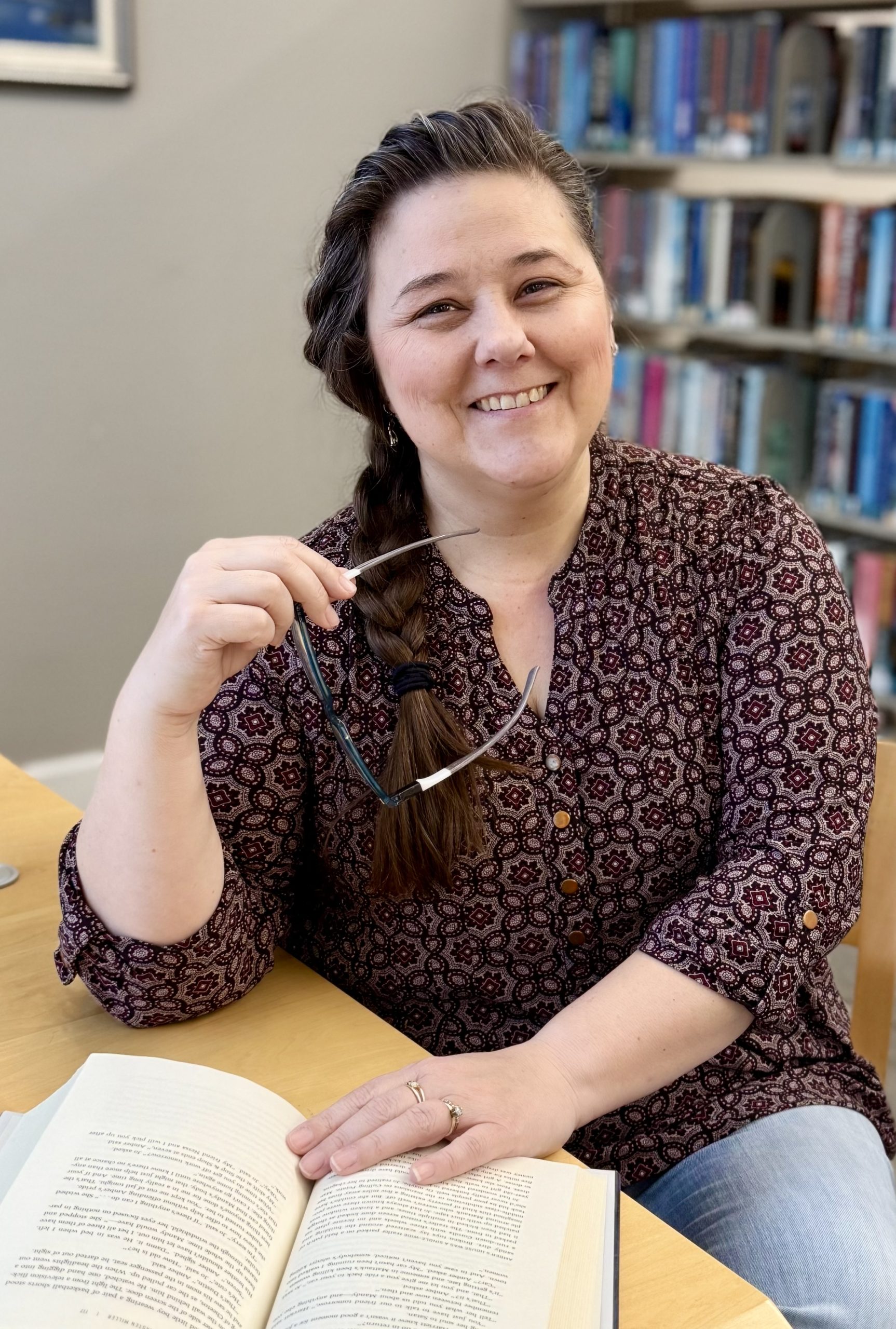
TGBC: The “crone” is an archetype that our culture has often pushed to the margins — yet you’ve centered it. What drew you to writing protagonists at this stage of life, and what do you hope readers take away from seeing them so vividly in focus?
JS: I was inspired to use the crone archetype in Lady Justice and the Sisterhood of the Crones by several things. Each contributed to the idea that women in their third phase, the crone phase, were underestimated and undervalued members of society. The first inspiration came from my own life. As a mother of adult children, an educator with over twenty years of experience, and a person lucky enough to have several multigenerational relationships, I could see the valuable role crones were playing in the pockets of society where they were looked to for their experience, wisdom, and courage. In Margaret Atwood’s Babes in the Woods, she touches on the frustration older women feel when the younger generations won’t listen to decades of experience women have, preferring to see them as “boomers” while using resources like the internet to learn how to be an adult, a wife, and a mother. The final influence was a local photographer who created “The Goddess Project”. The project resulted in dozens of portraits showcasing the beauty of the crones. With these three things in mind, I wanted my readers to see my crones as a wealth of lived experience, a valuable resource who is still capable of creating lasting change, and someone, despite the wrinkles, who is still as beautiful as they were in the other two phases of their life.
TGBC: The title pairs “Lady Justice” with “the Sisterhood of the Crone” — two very different ideas that somehow feel inevitable together. Can you talk about how those two threads came to live in the same story?
JS: The idea of combining “Lady Justice” with the “Sisterhood of the Crones” developed in my mind over several years beginning in 2017. I participated in a series of women’s marches, March for Our Lives (a youth movement in the US demanding sensible gun laws), the Black Lives Matter marches, and the protests against ICE. What I consistently saw over the course of eight years was a sisterhood of crones coming together to actively fight the injustices within their communities. They embody the ideology that justice should be blind to race, gender, and socioeconomic status — and they have demonstrated the courage to protest when the system is failing so many of its citizens. When the crones are called to Peaks Island, their role is to act as Lady Justice’s representatives, these women who have been fighting injustices in their own communities. It is through their experiences and wisdom that justice is returned to the US. The curse determined who needed to be removed from places of power, which allowed for a reallocation of resources, and the overall safety of the community was solidified. If Lady Justice was an actual person, she would have been on Peaks Island as part of the sisterhood.
TGBC: This book has a lot to say about power — who holds it, who’s denied it, and what happens when people band together to claim it. Was there a moment in writing where the story surprised you and took on a life of its own?
JS: Lady Justice and the Sisterhood of the Crones was always about reclaiming power from my first notes to final edits. The point where the story took on a life of its own was when the crones tried to find a place for the men affected by the curse. Figuring out what to do with the corrupted men was a significant struggle for me. I wanted them to be valuable members of the society that was being created by the crones. It was important to me that they were treated with care despite their selfish behavior. To do that, they had to first learn to be a part of society without the quid pro quo on which they had based their lives. They had to learn that there was inherent value in being a contributing member of society without money, power, status, or sex as part of the equation. The creation of the therapeutic centers was my solution to help them to see beyond the corrupting power they have worked towards their whole lives.
TGBC: Did you draw on real people or real events in writing this? And if so, how do you navigate the line between what’s true and what’s made up?
JS: I love to people watch, and several of the characters were created this way. Picturing a specific person fifty, sixty years into their future was a lot of fun and resulted in unique individuals only vaguely similar to the younger counterpart I had observed. There is, however, one character who is my interpretation of a real-life person. Ralph Trivial is based on real-life politicians who never seem to be held accountable for their inappropriate behavior. The idea for his character came from a conversation I had where I related his actions to those who have sold their souls to crossroads demons on paranormal shows. The corrupt seem to evade consequences as if by magic, and I wanted magic to hold them accountable. That was also how the idea for Mavon was born, too. The crossroads demon who had seen enough corruption that even she was done catering to the powerful.
TGBC: The title has such strong visual energy. Did you write toward it, or did the title come to you after the story was already taking shape?
JS: The title was one of the last parts of the story that I wrote. As the novel came together, the title just flowed and was the only title the novel ever had.
TGBC: One of the things that makes this book so rich for book clubs is that it asks us to think about who gets left behind by systems that were never built with them in mind. What conversation do you most hope readers are having after they close the last page?
JS: For good or bad, technology has moved us forward in a variety of ways. One of the benefits is the light it has shown on the systems that were created in this country and how they have deliberately disadvantaged a majority of the population. As readers finish Lady Justice and the Sisterhood of the Crones, my hope is that they feel seen, identifying with one or more of the characters and friendships that have developed throughout the story. I want them to feel hopeful. I want them to use their power and privilege to help to rebuild a system that does not allow its maidens to be sexualized, assaulted, or abused. A system that returns bodily autonomy to all women, in every cycle of their lives. To work to create equity for the BIPOC population, for the LGBTQIA+ community, for the unhoused and mentally ill. Ultimately, my hope is that everyone who reads my novel begins a conversation to improve the systems that only serve the top 1% of the country and then makes a ripple in their own community through their actions.
TGBC: The bond between the characters is clearly at the heart of this book. What do you think it is about shared purpose — especially later in life — that creates such a particular kind of loyalty and trust?
JS: The shared purpose is what brought the crones together, but their shared experiences created their bond. By the time women arrive at the crone phase, they are finished competing for arbitrary things – men, promotions, keeping up with their neighbors, looking younger. When they let go of the needless competition, it opens them up to support each other and grow their friendships. It celebrates all that they were and all that they had been. Together, their bond creates endless resources to improve their communities. I wanted the beautiful friendships that the crones and their allies found on the island to be joyful and full of laughter. It was their innate trust in each other that I hope appeals to readers and makes them open to seek out friendships in their own lives.
TGBC: What’s one question you wish someone would ask about this book — and what’s the answer?
JS: Why did you choose to focus on the friendships throughout the book instead of expanding on the budding relationship between Mavon and Sammie? I wanted to create a women-centered story with older characters that didn’t revolve around romance. Too many of the books I read with older characters, particularly ones with magic, have a catalyst of a divorce or a spouse dying. I wanted all of my characters to have an identity beyond their relationship. The crones demonstrated that friendship can be achieved even for those who are in loving partnerships. The relationship between Mavon and Sammie might have been an important piece of Mavon’s character arc, but the work the crones did and the bonds that they created were the heart of the story.