
Family Drama, Rebecca Fallon (Review by Jackie Adair)
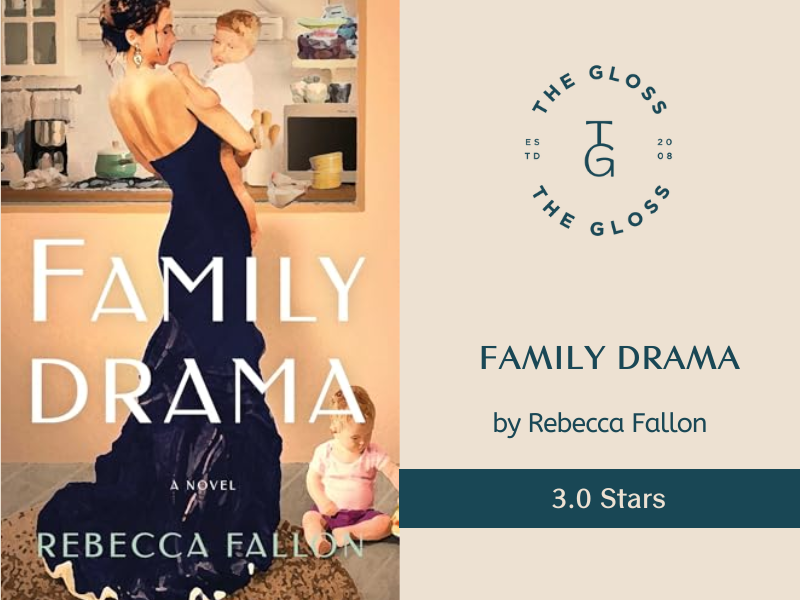
Rating: 3.0/5 Stars
This is a dual POV, dual timeline book about Susan Bliss, a beloved soap opera star who is torn between two worlds. When she passes away, she leaves behind two young children (Sebastian and Viola). In their young adult years, they pursue answers about their mother’s life while she was a soap opera star, despite their father trying to hide Susan’s past from them.
Flash back: Susan meets Alcott Bliss after her performance as a witch in a play about the Salem witch trials. The play is in a local museum, not Broadway, but that doesn’t deter Susan from her goal of becoming a Hollywood actress. Al and Susan marry and enjoy their lives in New England until Susan lands a spot on a daytime soap opera filmed in Hollywood. Al doesn’t want to leave his professorship at a New England college, so Susan commutes between the two coasts. When Susan becomes pregnant with twins, she becomes town between Hollywood and domesticity.
I felt like this book had a great premise and great bones. However, the constant shifting between points of view and timelines made it difficult for the reader to engage with the characters and generated confusion for the reader. Leading up to Susan’s death, I found it difficult to experience sadness because the reader did not have enough time to understand and empathize with Susan.
I did enjoy learning about how actresses in the soap opera industry were treated differently in the 1980’s where if you were pregnant, you were written off the show versus present day where a pregnancy is often written into the show. The book aptly describes Susan’s struggles between being a wife and mother and being an actress. I also found that the time periods (1980’s and 2000’s) were well represented in this book. But, the dual POV and dual timeline made it difficult for me to remain engaged in the book.
This book would provide excellent bones for a TV or streaming series. I would definitely read one of this author’s titles again.
2 Comments
Great review!!
This is a thoughtful and evocative review that captures the visceral tension and emotional complexity inherent in the stories we tell about the people who know us best. I love the emphasis on “the messy truth of belonging”—the recognition that great fiction doesn’t just mirror family drama, but dissects the intricate layers of loyalty, resentment, and love that define our closest relationships. It is a powerful reminder that literature serves as a vital mirror, allowing us to process our own shared histories and find a sense of catharsis in the beautifully flawed experiences of others. Thank you for sharing such a professional and engaging perspective on how a well-crafted narrative can deepen our understanding of the ties that bind us!