
Counting Backwards, Jacqueline Friedland (Review by Jenna Dran)
Rating: 4.0/5 Stars
“Counting Backwards” by Jacqueline Friedland is an alternating, dual-timeline story of two women who become entangled in reproductive rights battles of their eras. Carrie Buck’s narrative, based on her real-life experience as a 1920s Virginia eugenics experiment, is interwoven with the fictional lawyer Jessa Gidney, who is fighting against medical reproductive harm against immigrant women in a detention facility 100 years later. It is through Jessa’s Grandmother, Gram, and long-buried secrets, that we learn how Jessa’s zeal for justice for the modern-day, incarcerated women she represents can be traced back to her family’s connection to Carrie Buck’s 1927 Supreme Court case, which legalized forced sterilization.
I was immediately interested in reading this book as a women’s health practitioner and vocal advocate ensuring the protection of reproductive rights. One of the ways we fight for reproductive autonomy is by exposing past and present atrocities, and I think many readers may be surprised to learn that coerced sterilization is still legal and still occurs, though the telling in this story is fictionalized.
But this book is about even more than the complicated occurrences of reproductive violations. This is also a story of personal identity, partnership, motherhood, and family, in all its forms. Carrie Buck is taken from her mother and half-siblings into a foster family at a young age and later put in an institution for the “feeble-minded”, a few of the many injustices to befall her. Amidst her hardship, Carrie finds a blossoming, life-long friendship with her childhood schoolmate, Billy, one of the few redemptive male characters of the book.
Jessa also loses her parents early on and is raised by her Gram, their relationship becoming more tense and complex as the family history related to Carrie Buck is revealed. Jessa progressively redefines her relationship with her husband, Vance, as they struggle with infertility issues and arguments over the direction of her legal career. However, Vance is such an insufferable asshole, that it is hard to maintain respect for Jessa who excuses much of his behavior, as he tries to control and manipulate her under the guise of care and concern. It takes Jessa some time to see Vance clearly, as the reader sees him from the outset.
In its essence, “Counting Backwards” looks at both Carrie’s and Jessa’s lives and how motherhood defines them at different points, whether motherhood is thrust upon them, highly desired, or denied to them. It asks readers to contemplate—can anyone but a woman herself decide if she is ready and fit to be a mother? And who are the loved ones and family who support women with those intimate decisions?
“Counting Backwards” is a decidedly worthwhile read, though the first third of the book was more challenging for me because the characters were slow to develop into three-dimensional people, and Jessa’s inner thoughts read as overly sentimental. As the book progressed, however, I found myself increasingly intrigued as both the story and format revealed themselves to be less formulaic.
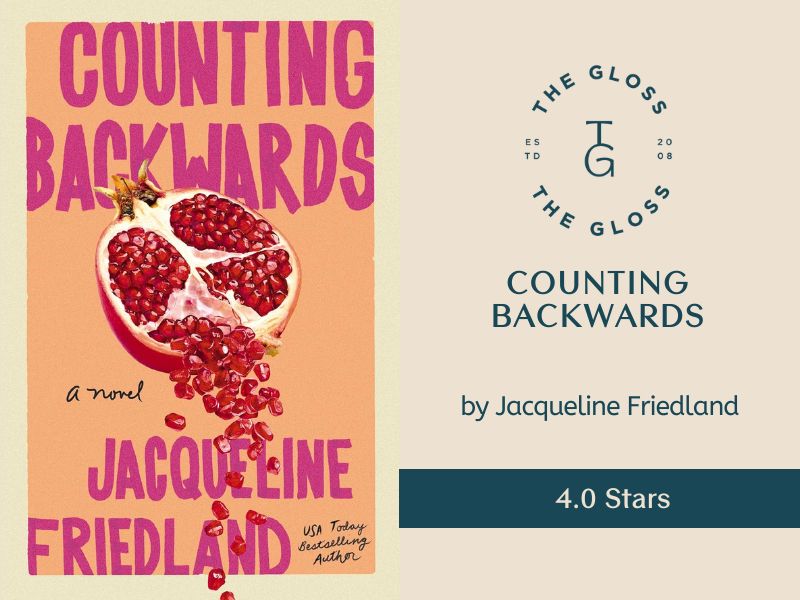
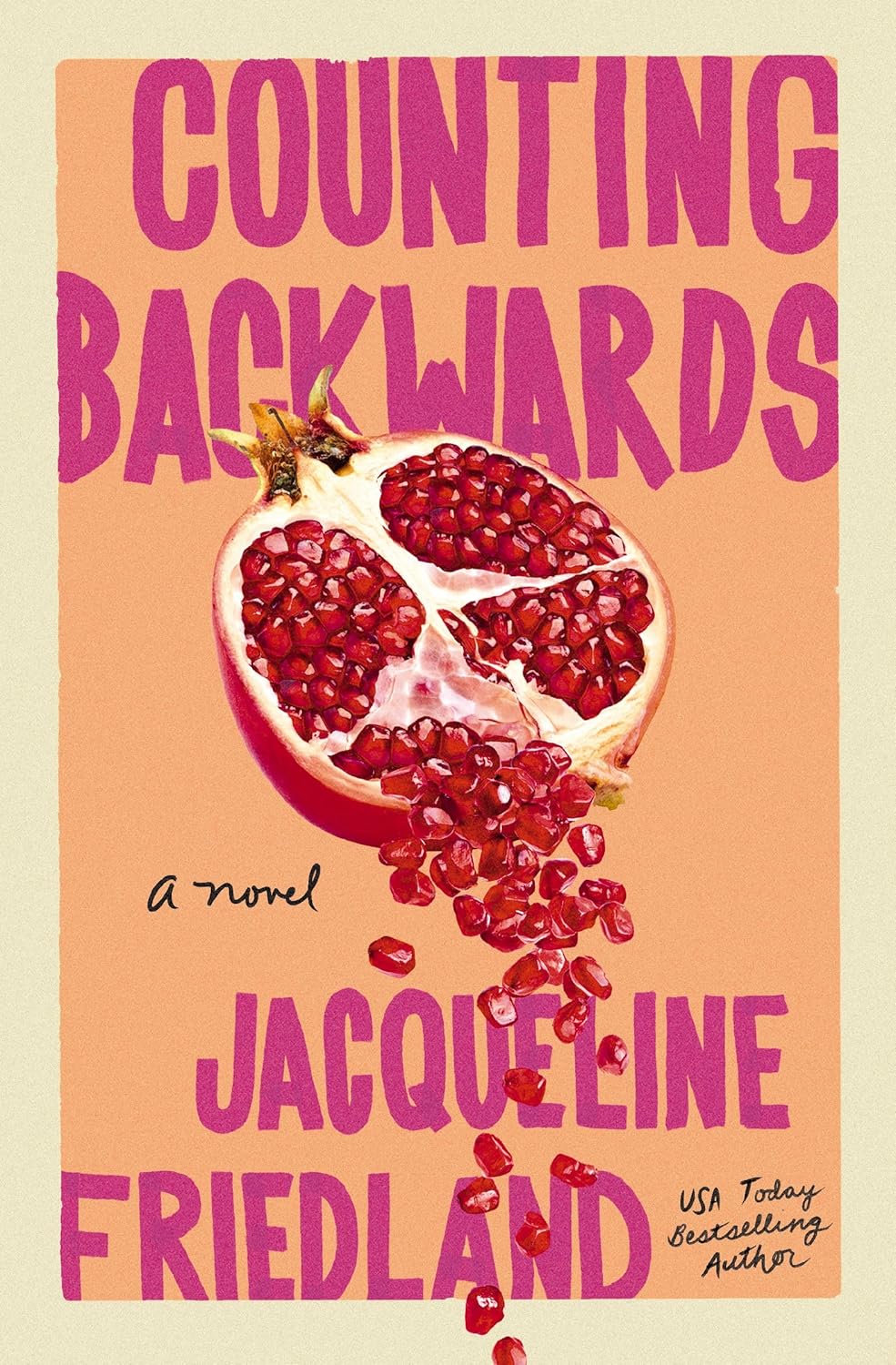
The cover of the book is also worth a mention. The colorful illustration of an open pomegranate with the seeds spilling out evokes an ovary. The title, “Counting Backwards,” refers to the countdown done prior to going to sleep under general anesthesia for a surgical procedure, also presumptively pointing to the march back in time that we are witnessing in reproductive freedoms in today’s climate. A fantastic cover design and title!
While not all the characters of “Counting Backwards” will stay with you after you finish this book, the ideas the story provokes certainly will. As the author notes, the story is “dedicated to all the women who are fighters,” and I hope it inspires others as it inspired me to continue to fight on!