
The Queen of Wishful Thinking, Milly Johnson (Review by Stephanie Crane)

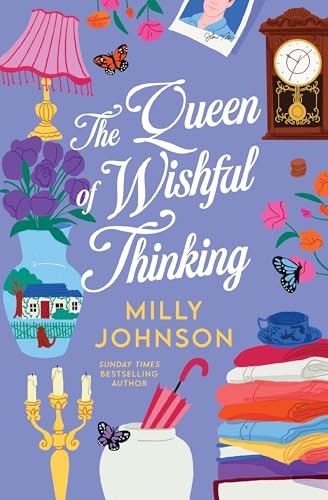
Rating: 3.2/5 Stars
The Queen of Wishful Thinking presents itself as a cozy, slightly quirky story about antiques and fresh starts, but it quickly reveals something heavier beneath the surface. At its core, it’s about Bonnie, a woman quietly suffocating in both her marriage and her work, trying to find a way out and rediscover herself. Along the way, the novel explores second chances, emotional resilience, and the unexpected connections that can help pull someone forward. It leans into the idea that sometimes change doesn’t come in big, dramatic moments, but in small, quiet realizations.
The relationship between Bonnie and Lew is one of the book’s strongest elements. Their connection unfolds slowly and gently, built on shared understanding rather than instant chemistry. Lew, older and quietly attentive, offers a contrast to the emotionally draining relationships surrounding them. Their dynamic is full of small moments, hesitant trust, and mutual healing, which makes their bond feel realistic and earned rather than rushed.
The antique shop setting adds a thoughtful layer of symbolism, with restoration mirroring the characters’ own journeys. There is humor, community, and warmth woven throughout, balanced by darker, more emotionally raw themes about marriage, identity, and what it means to start over when you didn’t realize how stuck you were. The side characters and shop environment help create a sense of belonging that Bonnie has been missing.
That said, while I did get through the book and found parts of it genuinely enjoyable, it took a while to fully engage. The pacing, especially in the middle, felt slow, and at times I wanted more momentum or a deeper connection to the characters.
Overall, it’s a thoughtful and emotionally layered read with a satisfying payoff, even if it wasn’t entirely my cup of tea.