
The Girls Before, Kate Alice Marshall (Review by Lara Ferguson)
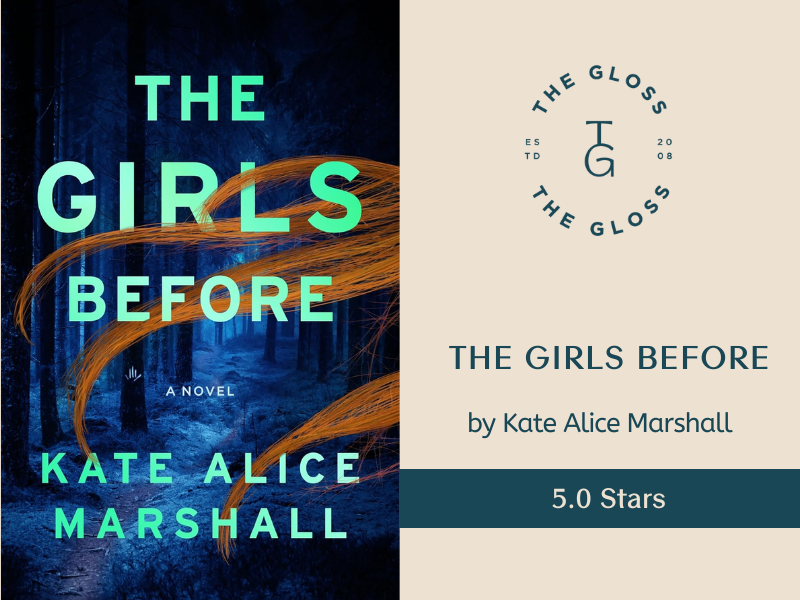

Rating: 5.0/5 Stars
Kate Alice Marshall’s The Girls Before is not only a thriller about abduction and survival—it is a haunting exploration of how communities and families conceal their darkest truths. Beneath the surface of its twisting and suspense-filled plot lies a piercing commentary on the ways silence, complicity, and generational secrets perpetuate harm.
The novel intertwines two narratives: a kidnapped woman trapped in a basement, and Audrey, a search-and-rescue expert still haunted by the disappearance of her best friend Janie years earlier. While the captivity storyline provides immediate tension, it is Audrey’s journey into the forest—and into the heart of her community—that reveals the novel’s deeper point. Marshall portrays the town and its powerful families as complicit in maintaining myths and half-truths, allowing violence to fester in the shadows. The legend of the witch who saves girls from “bad men” becomes a metaphor for the stories communities tell themselves to mask their failures, shifting responsibility onto folklore rather than confronting the predators in their midst.
Families, too, are depicted as both protectors and perpetrators. Loyalty, reputation, and fear of exposure can bind relatives to silence, even when that silence costs lives. The missing girls are not just victims of individual men but of a collective refusal to face uncomfortable truths. The forest, with its secrets buried beneath generations of whispers, mirrors the suffocating weight of these unspoken histories.
Marshall’s prose captures this hidden darkness with precision. Her alternating perspectives gradually peel back layers of denial and complicity, revealing how communities can become cages as confining as any basement. The suspense is heightened not only by the mystery of who took the girls, but by the unsettling realization that everyone may bear some responsibility for their disappearance.
Ultimately, The Girls Before is a chilling reminder that evil rarely exists in isolation. It thrives in silence, in families unwilling to confront their own shadows, and in communities that prefer myth to accountability. Marshall’s novel lingers because it forces readers to ask: what darkness do we allow to remain hidden, and at what cost?