
Daughter of Egypt, Marie Benedict (Review by Kristin Kurek)
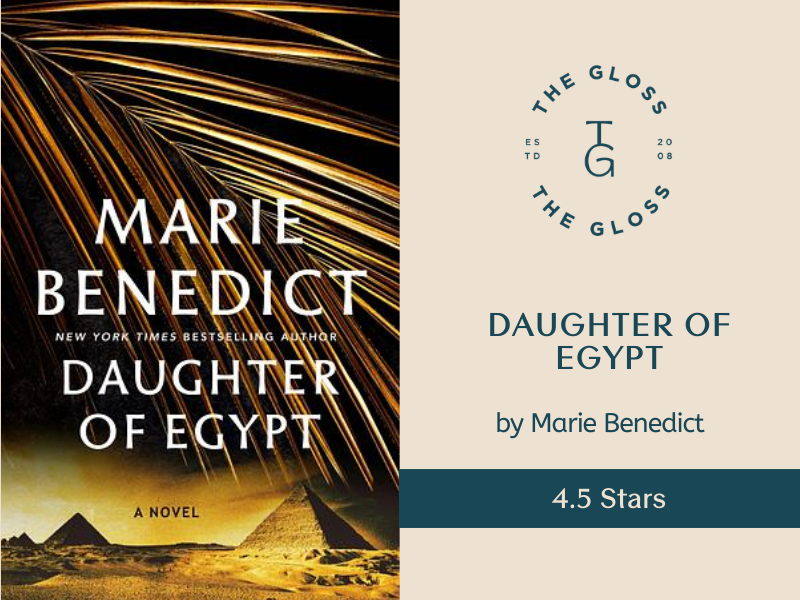

Rating: 4.5/5 Stars
Marie Benedict is the queen of female empowerment and historical fiction. And, in Daughter of Egypt, she has done it again!! Daughter of Egypt is a dual timeline, dual POV novel that toggles between 1920’s United Kingdom and 1400’s BCE Egypt.
In the 1920’s, Lady Evelyn Herbert, daughter of Lord Carnarvon, struggles to meet expectations as a society woman of her time. Instead, she is fascinated with her father’s yearly Egyptian expeditions and the resultant artifacts. As she becomes more involved in excavations, she develops an obsession with finding the tomb of Hatshepsut, one of Egypt’s rare famous female pharaohs. Shockingly, she has been largely erased from history.
In ancient Egypt, Hatshepsut is the daughter of a pharaoh, the widowed wife of a pharaoh, and a regent to an infant pharaoh. Why should SHE not be a pharaoh? How will her people respond to a female pharaoh? How will she cement her legacy?
Marie Benedict delicately weaves the stories of two women in very different eras rejecting societal trends. I loved learning about ancient Egyptian practices and culture during Hatshepsut’s reign. She was driven to create peace for her people and establish a prolific legacy. She knew that she was as worthy and as competent as any man to rule as pharaoh. She only had to get buy-in from her people. She is an inspiration!
I was exposed to many aspects of a post-Great War world and the struggle of nascent Egyptian independence. I was particularly rapt by the involvement of women in the fight for Egyptian independence. Specifically, the women ignored class and cultural barriers to join in political action. The book discusses the conundrum of artifact ownership and the rights of a country to own artifacts of their history. Removing artifacts from their homeland has always made me uncomfortable while visiting museums.
Overall, this latest book by Marie Benedict is a dream-come-true for historical fiction lovers and those interested in women’s empowerment.